WAS YOUR ANTENNA FREQUENCY CHECKED DURING YOUR LAST CERTIFICAITON?
MOST AREN’T !
AI assisted legal analysis is teaching attorneys that the most straight forward challenge to radar evidence today is a certification that lacks a documented, measured antenna frequency.
This critical omission is now one of the most frequently cited grounds for challenging radar evidence. Studies show frequency measurement is skipped in the majority of field calibration checks due to the certification company’s lack of proper equipment – leaving departments exposed!
If you see any of the following exact numbers on your certification certificate this is simply the manufacturer’s “label frequency” on the side of your antenna such as:
K Band 24.15 GHz
MPH Radar Ka Band 33.8 GHz
Stalker Ka Band 34.7 GHz
Kustom and Decatur Ka Band 35.5 GHz
This indicates that the antenna frequency was not actually measured during that certification.
Three ruling authorities require traceable frequency verification for a valid Doppler radar certification –
- FCC – Radar units must operate within licensed band limits; frequency drift is a primary violation.
- NIST – Speed measuring devices require calibration to the National standards; frequency is the root measurement.
- IACP – Recommends annual frequency verification to keep evidence admissible.
Why?
Because of Drift and Aging. Temperature and Aging shift oscillator frequency – only regular frequency verification catches drift.
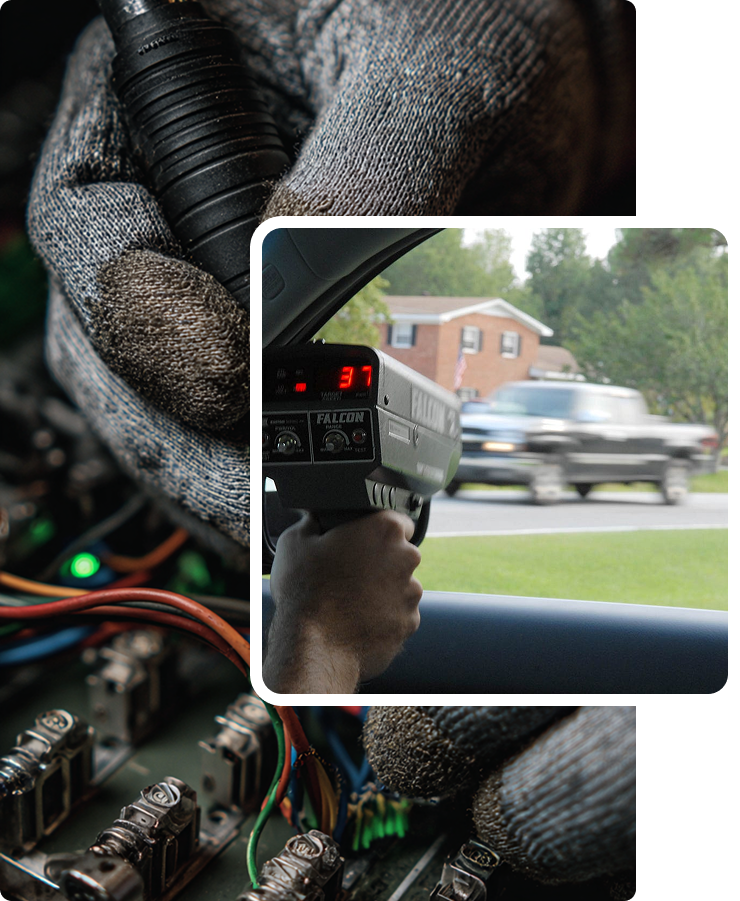
Frequency meters are expensive—and we use them. You can watch your radar’s frequency measurement in real time as our technician checks it directly from your unit. This is one of the reasons legitimate certifications cost more.
We do it right – Because it’s your reputation on the line.